Why Impact Alone Doesn't Make You Investable
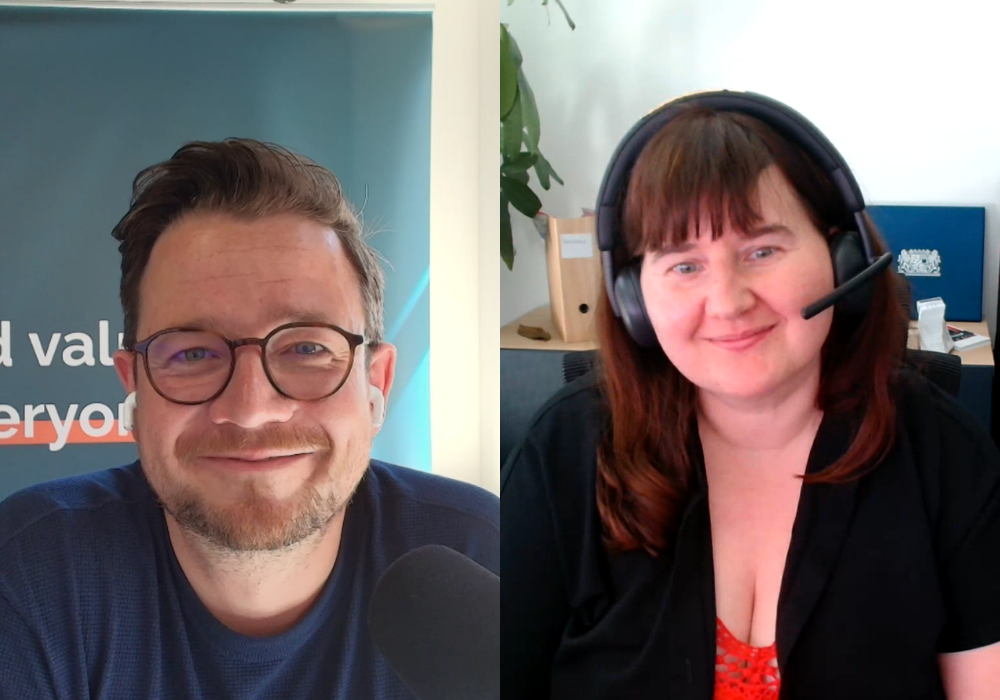
Anika Gruner of Neuramancer on forensic AI, the Valley of Death, and what it actually takes to turn impact into a business.

The Fight Against AI Deepfakes: A Conversation With Anika Gruner
There's a moment in every impact founder's journey where the applause stops being enough. Where the awards, the political attention, the invitations to panels and conferences all feel real but none of them translate into revenue. Where you realize that having a mission doesn't mean you have a business.
Anika Gruner hit that moment. And what she did about it is worth hearing, whether you're building a deepfake detection platform or a community garden app.
Listen to the full episode here! 👉 Spotify | Apple
Subscribe to our newsletter! 👉 Subscribe Now!
Get more conversations, tools and stories for impact founders straight to your inbox.
How You Detect a Deepfake Without Looking at a Face
Most detection tools try to spot whether a face looks "weird." Neuramancer doesn't look at faces at all. Their approach is content-agnostic: every photo taken with a physical camera carries a statistical fingerprint in its background noise. Invisible to the human eye, but mathematically distinctive. AI-generated images carry a different signature entirely, born from the model architecture rather than from a sensor.
Neuramancer reads those signatures and tells you: camera or AI? Real or manipulated? Where exactly? The key difference from other solutions is explainability. Not just a probability score, but a forensic report. That matters when the EU AI Act demands transparency, when insurers need audit trails, and when courts need evidence.
The T3N Story That Changes How You Think About PR
Here's the part that every early-stage founder should pay attention to. Anika wrote a press release when Neuramancer received SPRIND funding. She sent it to local newsrooms manually. The Miesbacher Merkur published a piece. Bavarian politician Ilse Aigner noticed and visited them. Another journalist picked it up. Through four degrees of separation, they landed in T3N magazine.
Then a chief innovation officer at a major German insurer opened T3N on a plane, read the article, and called: "We have to work together." That was October 2024. The partnership took a year and a half of POCs, compliance, and contract negotiations. They're now on the verge of a full engagement. No warm intro. No investor connection. A press release to a local newspaper started a chain reaction that led to their biggest commercial opportunity.
The lesson: visibility creates opportunities you can't plan for, but you have to be out there for it to work.

From Applause to Revenue
Neuramancer has raised €1.7 million in pre-seed from Vanagon Ventures, Bayern Kapital, and others. SPRIND contributed nearly €700,000 in equity-free funding. They've been on political agendas, in newspapers, and on stages. And Anika is blunt: none of that pays the bills. The political attention hasn't translated into government contracts. After two years, Neuramancer has zero public sector customers. Every government conversation ended in deprioritization or sticker shock at on-premise deployment costs.
The insurance industry, on the other hand, has an actual business problem that someone will pay to solve: AI-generated fraud claims are growing, and automated claims processing needs a verification layer. Martin Sondenheimer, former Corporate Venture Builder at Munich Re, joined as co-CEO to open those doors. That's where revenue will come from. The takeaway for impact founders: political validation and commercial viability are two completely different things. You need both, but only one keeps the lights on.
The Take That Impact Founders Need to Hear
Anika says something in this episode that not everyone in impact circles wants to hear: having impact doesn't make you investable. Your business model has to work, your pitch has to be compelling, your unit economics have to make sense. Impact is your motivation and potentially your USP, but it's not a substitute for a functioning business. "The pitch can't be: I'm a woman and I do impact," she says, fully aware that she is both.
Conviction plus competence. Mission plus model. And the gap between the two is where some impact startups get stuck.
Bridging That Gap
This is exactly the challenge the Public Value Academy was built to address. Not to teach founders why impact matters - they already know that - but to give them the frameworks, the measurement tools, and the business model clarity that turn a mission into something an investor, a funder, or a customer can actually evaluate.
Anika talks about the Valley of Death: that brutal phase where you have a product but no revenue and no proof anyone will pay. Too many impact founders stay in that valley longer than they need to, not because their idea is bad, but because they can't prove their impact in a language the market understands.
If that sounds familiar, the PVA is running batches across Germany, in Munich, Hamburg, Bielefeld, Leipzig, Rostock, and more coming soon. The program is free, the tools are real, and the network is growing.
👉 Apply Now for the Public Value Academy!
Listen to the full episode here! 👉 Spotify | Apple
Join our community for insights, events, and new episodes. 👉 Follow us Now!