When Students Become Storytellers
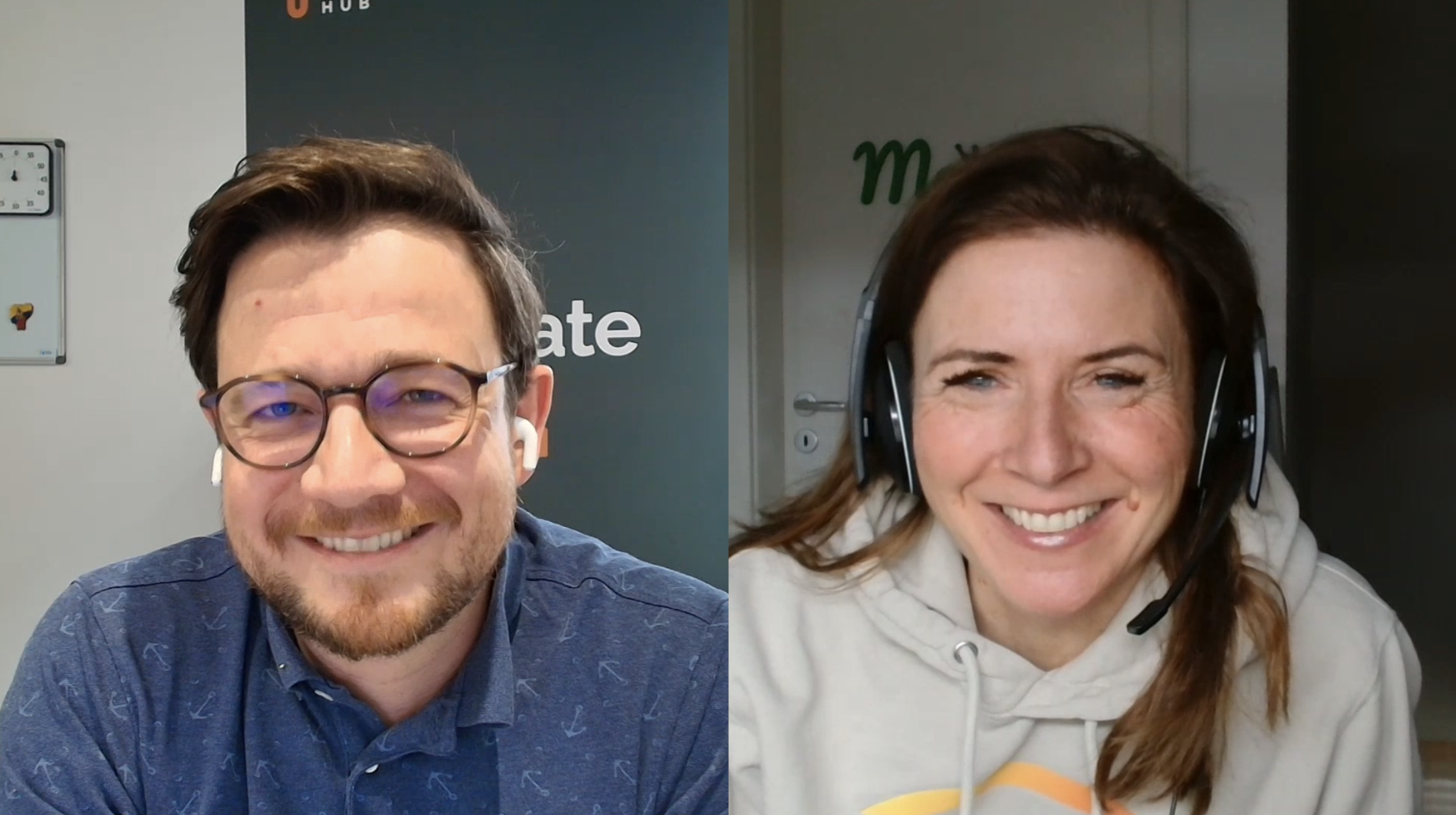
In our latest Impact Runde episode, Nina Mülhens explains how DigitalSchoolStory is transforming classrooms by giving students a voice they often didn't even know they had.

Turning Passive Learners Into Active Creators: A Conversation with Nina Mülhens
What happens when a communications strategist walks into a room full of education problems - during a pandemic, at a hackathon, with no plan to start a company? You get DigitalSchoolStory, and a method that's now reached over 16,000 students.
Nina Mülhens didn't set out to change education. She was a communications expert - press spokesperson, brand strategist, someone who understood how messages are built, delivered, and received. Then came Covid, a Bildungshackathon called #WirFürSchule, four sleepless nights, and a winning idea that refused to stay a side project.
Listen to the full episode here! 👉 Spotify | Apple
Subscribe to our newsletter! 👉 Subscribe Now!
Get more conversations, tools and stories for impact founders straight to your inbox.
The Method
The concept is simple: students take a topic from their curriculum and translate it into a 90-second video. Not for TikTok. Not for the public. For each other, in a protected classroom space where nobody judges and nothing gets published. But what sounds like a creative exercise is actually a deep learning process. In small groups, students have to research, discuss, agree on a narrative, write a script, choose visuals, and produce something coherent - all within strict time limits. Along the way, they practice teamwork, critical thinking, media literacy, and something harder to measure but impossible to miss: self-efficacy.
As Nina told us, one student recently said on her podcast: "It completely changed my self-image." That's the type of moment that makes the work worth it.
Training Teachers, Not Replacing Them
What makes DigitalSchoolStory scalable isn't a platform or an app - it's the fact that they train teachers to run the method themselves. After a structured onboarding process, educators can facilitate it independently. DigitalSchoolStory doesn't stay in the classroom permanently. It equips teachers with the tools, then steps back.
That's a deliberate design choice. Nina and her co-founder thought about scalability from day one - not by building technology, but by building a replicable method with materials, peer learning, and ongoing support that doesn't require the founding team to be in every room.
The Nonprofit Question
DigitalSchoolStory is a gGmbH - a nonprofit limited liability company. Nina is candid about what that means in practice: it's harder to raise capital, harder to grow fast, and harder to pay yourself a decent salary while working long weeks. But it was a conscious choice. The work is too socially relevant to privatize, and the target group - schools - operates on public budgets, not venture capital logic. Funding comes from three sources: schools paying directly (or through state budgets), foundation partnerships, and corporate sponsors supporting regional digital education. No VC, no ads, no subscription traps.
The tension is real, though. Nina doesn't sugarcoat it: "There's still this assumption in schools that everything is free. But there's no such thing as free - someone always pays."

What Kids Have to Say
Perhaps the most striking part of our conversation was about what happens when you give young people a format to express themselves without telling them what to say. They don't just parrot facts. They find metaphors, they connect abstract knowledge to their own lives in ways that textbooks never could. And sometimes, the quiet ones - the students nobody expected anything from - are the ones who step in front of the camera first.
That's not just a theory. That's a communication expert watching what happens when the system gets out of the way. And it's worth listening to.
Listen to the full episode here! 👉 Spotify | Apple
Join our community for insights, events, and new episodes. 👉 Follow us Now!