21st Century Problems Need 21st Century Solutions
Germany's education system hasn't fundamentally changed since the 1860s. Nik Riesmeier of the Founders Foundation explains why EdTech startups are the answer.

Why Education Needs Startup Thinking: A Conversation with Nik Riesmeier
Here's a thought that stuck with us long after this conversation ended: if someone from the 1860s - when compulsory schooling was first introduced - walked into a German classroom today, they'd still recognize the basic setup. The content has changed. The methods have evolved. But structurally? We haven't cracked it. Not even close.
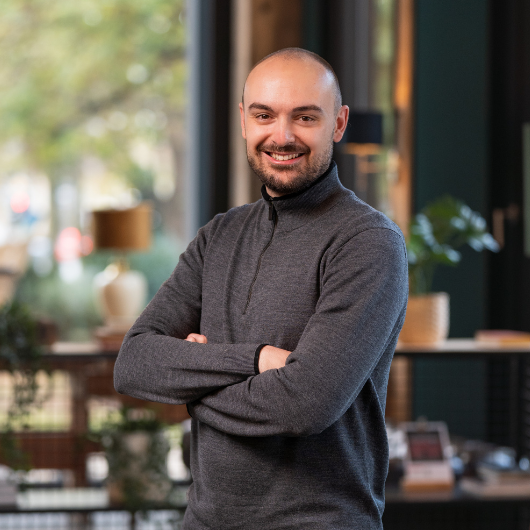
That's the premise Nik Riesmeier works from every day. As Director of Education at the Founders Foundation in Bielefeld, he leads EdTech Next - an initiative supported by North Rhine-Westphalia's Ministry of Economy and Climate Protection that builds the ecosystem EdTech startups need to survive and scale.
Listen to the full episode here! 👉 Spotify | Apple

Subscribe to our newsletter! 👉 Subscribe Now!
Get more conversations, tools and stories for impact founders straight to your inbox.
From Berlin Startups to Bielefeld's Mission
Nik's path wasn't a straight line to education. He studied in Maastricht, Macau, Lisbon, and St. Petersburg, then landed in Berlin's startup scene — including a stint at Trade Republic. Four years of venture development taught him the speed, the execution mindset, and the willingness to fail that defines good founders. But over time, something shifted. He went from being the player on the field to the coach on the sideline — and found that enabling others gave him more energy than building his own thing.
When the Founders Foundation offered the chance to apply that experience to education, he took it.
Startups in the Classroom? Seriously?
The natural pushback: education is bureaucratic, slow, regulated by 16 different state governments, and structurally allergic to innovation. Why would anyone try to fix it with startups?
Nik's answer is simple: because the old tools aren't working. Teacher shortages can't be solved by training more teachers alone. Digital infrastructure in schools is years behind. And the challenges of 2026 - AI, mental health, social inequality - demand solutions that didn't exist five years ago. Startups bring the speed, the testing culture, and the willingness to try things that institutions simply can't. What makes EdTech founders different, he says, is motivation. Unlike other verticals, almost nobody walks in dreaming of a quick exit and the Bahamas. These are teachers who are fed up, parents who see gaps, and business graduates who want their work to matter beyond a spreadsheet.
The Hardest Customer in the World
Selling to schools means selling to government - and Nik doesn't sugarcoat it. Procurement processes weren't built for startups. You need references you don't have, revenue history that doesn't exist, and patience that burns through runway fast. The Founders Foundation acts as a translator: teaching startups how to speak to institutions, and teaching institutions what startups can actually offer them. The key reframe? Stop calling it "school digitization." Start calling it "solutions for the challenges schools already have."
Impact as a KPI - Even When It Takes 20 Years
One of the most honest moments in our conversation was about impact measurement in education. The truth is, you might not know if early childhood education worked for another two decades. But Nik argues that's not an excuse to skip measurement - it's a reason to start now. Track engagement, satisfaction, dropout rates, teacher workload. Make impact a KPI from day one, even if the full picture takes years to emerge. Because investors - whether impact-first or business-first - need to see that you take your own mission seriously enough to measure it.
That's a philosophy we share. And it's why tools like Inluma exist: to help founders translate impact from a feeling into something fundable.
Listen to the full episode here! 👉 Spotify | Apple
Join our community for insights, events, and new episodes. 👉 Follow us Now!